
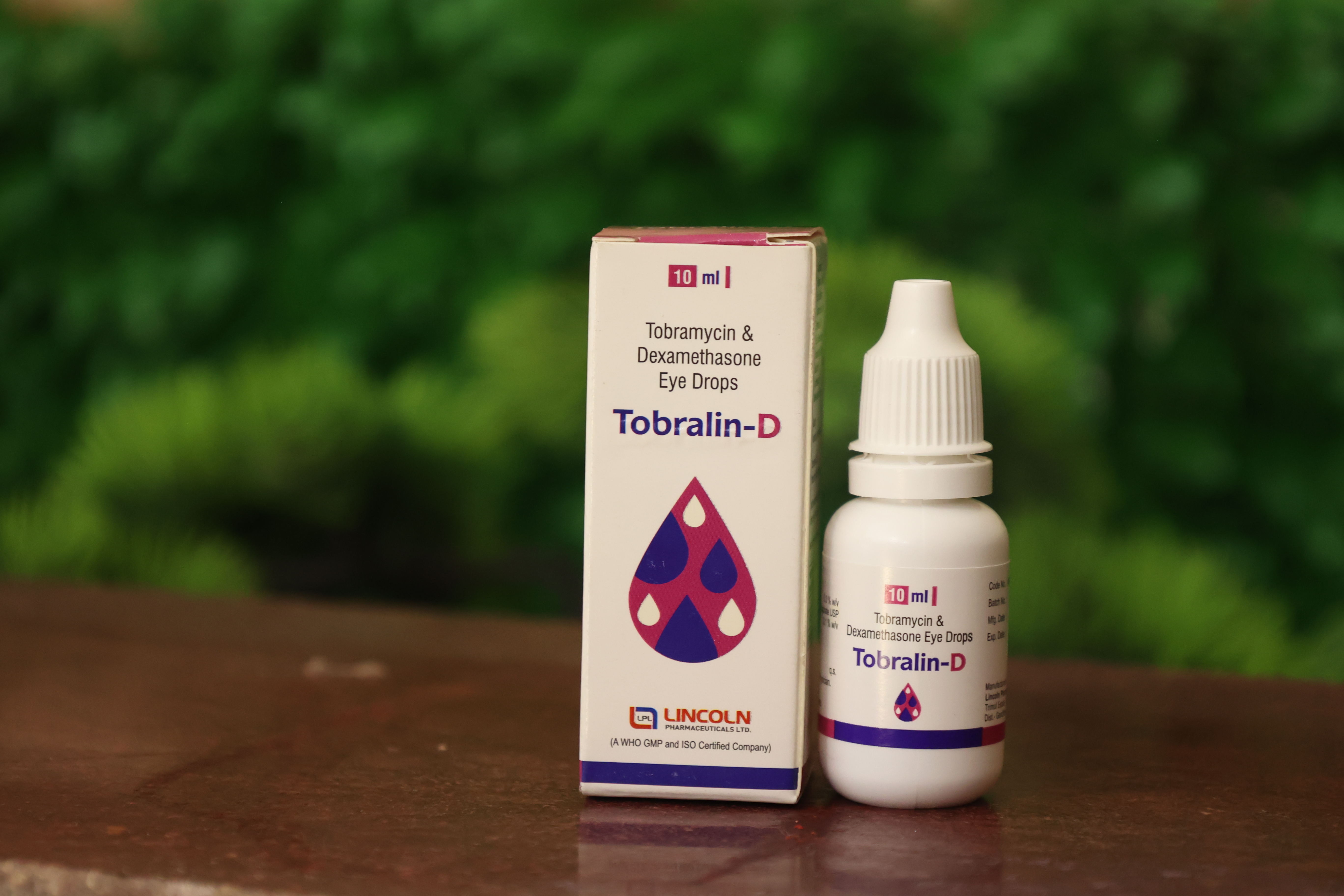
TOBRALIN-D EYE DROPS
Generic Name: Tobramycin + Dexamethasone
Dosage Form: Sterile Ophthalmic Eye Drops
Drug Classification: Aminoglycoside Antibiotic + Corticosteroid
COMPOSITION
TOBRALIN-D contains tobramycin, an antibacterial agent, combined with dexamethasone, a corticosteroid with anti-inflammatory properties. The exact concentrations should be confirmed from the manufacturer's product label.
PRODUCT DESCRIPTION
TOBRALIN-D Eye Drops are a combination ophthalmic formulation designed to provide antibacterial activity and control inflammation in selected ocular conditions. Tobramycin inhibits bacterial protein synthesis, while dexamethasone reduces inflammatory responses in ocular tissues. This combination is intended for conditions in which both antibacterial and anti-inflammatory treatment are clinically appropriate.
INDICATIONS
TOBRALIN-D may be prescribed for selected bacterial eye infections associated with inflammation and certain postoperative ocular conditions when antibacterial coverage and corticosteroid therapy are appropriate. Use should be based on an ophthalmic examination and professional assessment.
MECHANISM OF ACTION
Tobramycin binds to the bacterial 30S ribosomal subunit, disrupting protein synthesis and inhibiting bacterial growth. Dexamethasone suppresses inflammatory mediators, helping reduce ocular inflammation, redness, and swelling. These complementary actions provide antibacterial and anti-inflammatory effects in appropriately selected patients.
CLINICAL BENEFITS
TOBRALIN-D combines antibacterial activity against susceptible bacteria with anti-inflammatory effects. When appropriately prescribed, it may help control bacterial infection and associated inflammation, including redness and swelling. Its combined formulation provides two complementary therapeutic actions in a single ophthalmic preparation.
KEY BENEFITS
• Provides antibacterial activity against susceptible bacteria.
• Helps control inflammation in selected ocular conditions.
• May reduce inflammatory redness and swelling.
• Combines an antibiotic and a corticosteroid in one formulation.
• Supports clinician-directed management of appropriate inflammatory bacterial eye conditions.
DOSAGE AND ADMINISTRATION
Use TOBRALIN-D according to the ophthalmologist's prescription and the manufacturer's instructions. The dose and duration depend on the diagnosis, severity, and individual response. Wash hands before administration, avoid touching the dropper tip to the eye or other surfaces, and close the bottle after use. Do not extend treatment without medical advice.
POSSIBLE SIDE EFFECTS
Possible side effects include temporary burning, stinging, eye irritation, tearing, discomfort, or blurred vision. Allergic reactions may occur. Prolonged or inappropriate corticosteroid use may increase intraocular pressure, contribute to glaucoma or cataract formation, delay corneal healing, and mask or worsen certain eye infections.
CONTRAINDICATIONS AND PRECAUTIONS
Avoid use in patients with known hypersensitivity to tobramycin, dexamethasone, or any formulation ingredient. Corticosteroid-containing eye drops may be unsuitable for certain viral, fungal, or untreated ocular infections. Use under medical supervision, particularly in patients with glaucoma, corneal disease, or persistent eye symptoms.
DRUG INTERACTIONS
Inform the healthcare professional about all other eye medications being used. When multiple ophthalmic products are prescribed, follow the recommended interval between applications. Potential interactions should be assessed according to the complete formulation and the patient's medication history.
USE DURING PREGNANCY
Use during pregnancy only when considered necessary by a healthcare professional after assessing potential benefits and risks.
USE DURING BREASTFEEDING
Consult a healthcare professional before use during breastfeeding. Treatment should be based on the clinical indication and an individualized assessment of potential benefits and risks.
SPECIAL INSTRUCTIONS
TOBRALIN-D should not be used for undiagnosed red eyes or self-treatment of eye infections. Because it contains a corticosteroid, ophthalmic supervision is important. Severe eye pain, reduced vision, marked light sensitivity, or worsening symptoms require prompt ophthalmic assessment.
Company: LINCOLN