
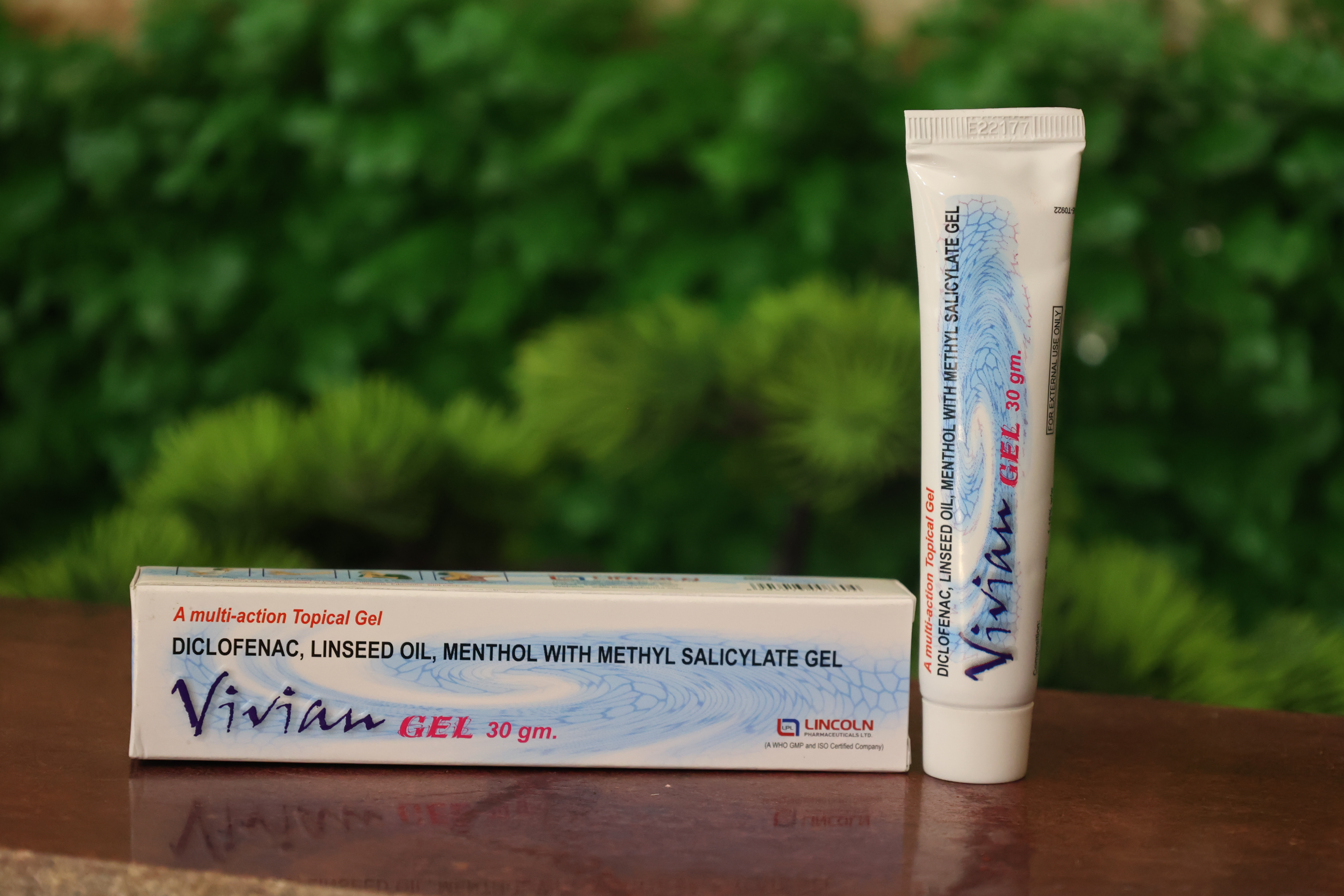
VIVIAN GEL
Generic Name: Diclofenac
Dosage Form: Topical Gel
Drug Classification: Non-Steroidal Anti-Inflammatory Drug (NSAID)
COMPOSITION
VIVIAN GEL contains diclofenac, a non-steroidal anti-inflammatory agent used for topical relief of pain and inflammation. The exact concentration should be confirmed from the product packaging.
PRODUCT DESCRIPTION
VIVIAN GEL is a topical analgesic and anti-inflammatory preparation designed to relieve localized musculoskeletal pain and inflammation. Diclofenac inhibits cyclooxygenase enzymes involved in prostaglandin synthesis, helping reduce inflammatory responses, tenderness, and pain at the application site. Its topical formulation provides localized treatment while generally resulting in lower systemic exposure than oral diclofenac.
INDICATIONS
VIVIAN GEL may be used for the relief of localized pain and inflammation associated with osteoarthritis affecting superficial joints, sprains, strains, sports injuries, and other minor soft-tissue injuries, depending on the approved product formulation and local prescribing guidance.
MECHANISM OF ACTION
Diclofenac inhibits cyclooxygenase enzymes, reducing the production of prostaglandins that contribute to pain, inflammation, and swelling. Applied topically, it acts in tissues near the application site to help relieve localized discomfort and improve functional movement.
CLINICAL BENEFITS
VIVIAN GEL helps relieve localized musculoskeletal pain and inflammatory discomfort. It may reduce tenderness, swelling, and stiffness associated with suitable conditions and support improved mobility during daily activities. Topical administration can reduce systemic exposure compared with oral formulations, although systemic adverse effects remain possible.
KEY BENEFITS
• Provides localized pain relief.
• Helps reduce inflammation and tenderness.
• Supports relief of pain associated with sprains and strains.
• May improve movement and everyday functional comfort.
• Offers topical administration without the need for oral dosing.
DOSAGE AND ADMINISTRATION
Apply a thin layer to the affected area according to the product label or healthcare professional's instructions. Gently spread the gel over intact skin and wash hands after application unless the hands are the treated area. Avoid contact with the eyes, mouth, mucous membranes, broken skin, and open wounds. Do not cover the treated area with an airtight dressing or apply external heat unless specifically advised.
The amount and frequency of application depend on the diclofenac concentration and the condition being treated. Follow the instructions for the specific product.
POSSIBLE SIDE EFFECTS
Possible side effects include redness, itching, rash, dryness, burning, or irritation at the application site. Less commonly, systemic effects such as gastrointestinal discomfort, kidney problems, fluid retention, or allergic reactions may occur, particularly with excessive use or prolonged application.
CONTRAINDICATIONS AND PRECAUTIONS
Do not use in patients with known hypersensitivity to diclofenac or other ingredients. Avoid use in patients who have experienced asthma, urticaria, or allergic reactions after taking aspirin or other NSAIDs. Do not apply to damaged skin. Seek medical advice before use if you have a history of stomach ulcers, cardiovascular disease, kidney disease, or asthma associated with NSAIDs.
USE DURING PREGNANCY
Diclofenac should generally be avoided during pregnancy unless specifically advised by a healthcare professional. NSAIDs are particularly restricted from around 20 weeks of pregnancy and should not be used from 30 weeks onward because of fetal risks, unless a specialist determines otherwise.
USE DURING BREASTFEEDING
Consult a healthcare professional before use during breastfeeding. Avoid applying the gel to the breast or any area where the infant could directly contact or ingest the product.
DRUG INTERACTIONS
Systemic exposure from topical diclofenac is generally lower than from oral diclofenac, but interactions may still occur. Inform the healthcare professional if you use oral NSAIDs, anticoagulants, or other medicines that may increase bleeding or kidney-related risks. Avoid combining diclofenac products without medical advice.
Company: LINCOLN