
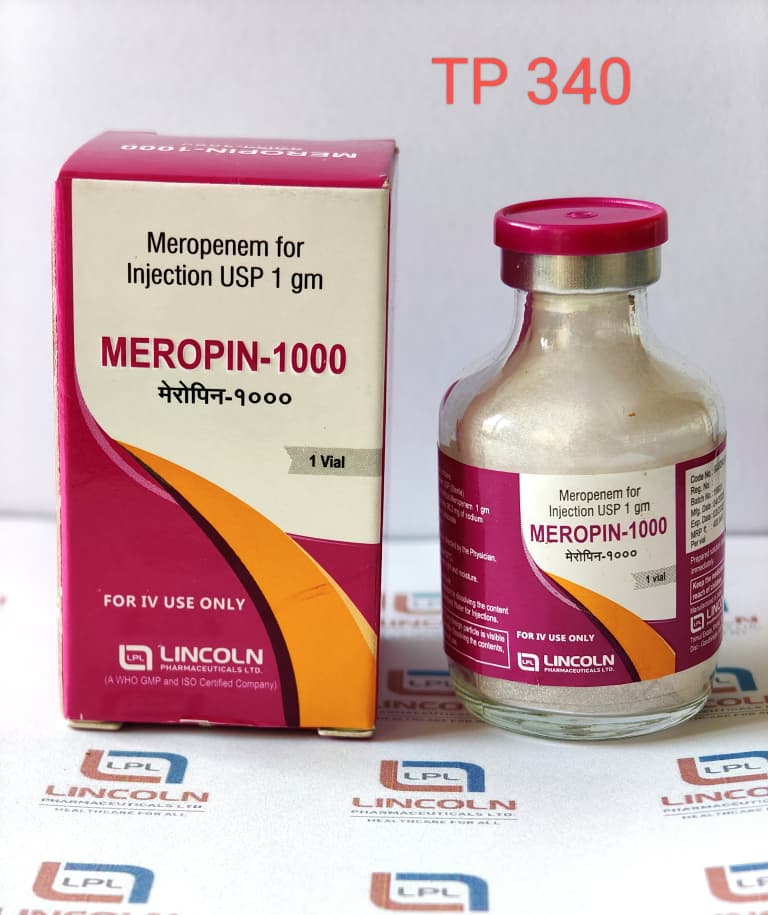
MEROPIN-1000 and 500 INJECTION
Meropenem for Injection USP
Dosage Form: Powder for Solution for Injection or Infusion
Route of Administration: Intravenous (IV) use only
Family: Carbapenem Antibiotic / Broad-Spectrum Beta-Lactam Antibiotic
Composition: Each vial contains Meropenem USP equivalent to 1 g of meropenem.
Indications: MEROPIN-1000 is indicated for the treatment of serious bacterial infections caused by susceptible microorganisms. Depending on approved prescribing information, indications may include complicated intra-abdominal infections, complicated skin and soft-tissue infections, bacterial meningitis, and severe infections associated with susceptible organisms. It may also be used for selected hospital-acquired infections according to clinical assessment and local treatment guidelines.
Mode of Action: Meropenem inhibits bacterial cell-wall synthesis by binding to penicillin-binding proteins, thereby disrupting peptidoglycan formation and causing bacterial cell death. It has broad-spectrum activity against many susceptible Gram-positive and Gram-negative bacteria, including certain anaerobic organisms.
Pharmacological Action: Meropenem is a bactericidal carbapenem antibiotic with activity against a broad range of susceptible bacteria. Its stability against many beta-lactamases contributes to its clinical utility in selected serious infections. However, some resistant organisms, including certain carbapenemase-producing bacteria, may not respond to treatment.
Clinical Benefits: MEROPIN-1000 provides broad-spectrum antibacterial coverage for selected serious infections when meropenem is clinically appropriate. Effective treatment can help control bacterial growth, resolve infection, and reduce the risk of infection-related complications.
Therapeutic Benefits: Intravenous administration delivers meropenem directly into the circulation, making it suitable for hospitalized patients who require parenteral antibiotic therapy. Treatment selection should be guided by the suspected infection, culture and susceptibility results, local resistance patterns, and the patient's clinical condition.
Dosage and Administration: The recommended dose and treatment duration depend on the type and severity of infection, the causative organism, the patient's age and weight, kidney function, and applicable prescribing guidelines. Adult regimens commonly use 500 mg to 1 g intravenously every 8 hours for certain infections; higher or different regimens may be required for specific indications, including meningitis, when approved. MEROPIN-1000 must be reconstituted and administered by a qualified healthcare professional according to the approved product instructions. Dose adjustment is necessary in patients with impaired renal function when indicated.
Side Effects: Possible adverse effects include headache, nausea, vomiting, diarrhea, abdominal discomfort, rash, itching, and inflammation or pain at the injection site. Changes in liver enzymes and blood-cell counts may also occur.
Serious Adverse Effects: Serious reactions may include severe allergic reactions, anaphylaxis, severe skin reactions, antibiotic-associated colitis, seizures, and significant blood-cell abnormalities. Seek immediate medical attention if severe allergic symptoms, seizures, or other serious reactions occur.
Contraindications: Do not use in patients with known hypersensitivity to meropenem or any product component. Carefully assess patients with a history of severe allergy to other beta-lactam antibiotics, including penicillins, cephalosporins, and carbapenems.
Precautions: Use cautiously in patients with renal impairment, a history of seizures, or central nervous system disorders. Monitor renal function and other relevant laboratory parameters when clinically indicated. Prolonged or inappropriate antibiotic use may contribute to antimicrobial resistance or secondary infections.
Drug Interactions: Concomitant use with valproic acid or sodium valproate may significantly reduce valproate concentrations and increase the risk of seizures; the combination is generally not recommended. Probenecid may increase meropenem exposure. Inform the treating healthcare professional about all medicines being used.
Use During Pregnancy: Use during pregnancy only when clinically necessary and when the expected benefits outweigh potential risks. Treatment should be prescribed by a qualified healthcare professional in accordance with the approved product information.
Use During Breastfeeding: Meropenem may pass into breast milk in small amounts. A healthcare professional should assess the need for treatment and consider potential effects on the nursing infant.
Storage and Handling: Store according to the manufacturer's approved product instructions. Reconstitute with a compatible diluent and administer within the recommended stability period. Inspect the prepared solution before use and do not administer if visible particles or abnormal discoloration are present.
Antibiotic Stewardship: MEROPIN-1000 should be used only when indicated for a suspected or confirmed susceptible bacterial infection. Obtain appropriate cultures when feasible and review treatment according to susceptibility results and clinical response. Avoid unnecessary use to help reduce antimicrobial resistance.
Product Presentation: One vial containing Meropenem 1 g for intravenous administration.
Product Summary: MEROPIN-1000 is a broad-spectrum carbapenem antibiotic formulated for intravenous administration in selected serious bacterial infections. By inhibiting bacterial cell-wall synthesis, meropenem helps eliminate susceptible bacteria and supports effective infection management when used appropriately under medical supervision.
Company: LINCOLN